Structural steel profiles are essential materials in modern construction and infrastructure projects. Known for their strength, stability, and versatility, these steel sections are widely used in residential, commercial, and industrial structures worldwide.
With increasing demand for durable and efficient building solutions, structural steel profiles continue to play a critical role in global construction markets.
What Are Structural Steel Profiles?
Structural steel profiles, also known as structural steel sections, are steel products formed into specific cross-sectional shapes to support loads and resist bending and compression. These profiles are typically manufactured from carbon steel and are designed to meet international construction standards.
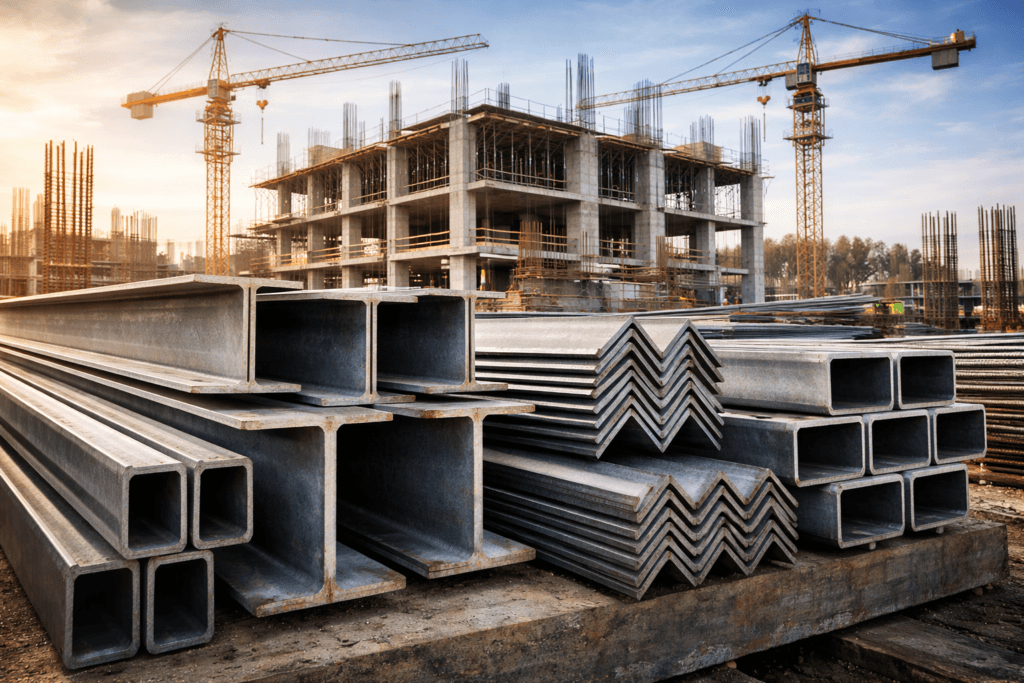
Common structural steel profiles include beams, angles, channels, and hollow sections.
Types of Structural Steel Profiles
H Beams and I Beams
H beams and I beams are widely used for load-bearing structures such as columns, bridges, and large-span buildings. Their high strength-to-weight ratio allows them to support heavy loads while minimizing material usage.
Angle Steel
Angle steel profiles are commonly used for frames, brackets, towers, and reinforcement structures. They provide excellent support in both vertical and horizontal applications.
Channel Steel
Channel steel is often applied in floor systems, wall framing, and machinery structures. Its shape offers good resistance to bending and is easy to install in construction projects.
Key Properties and Advantages
Structural steel profiles offer several advantages for construction applications:
- High strength and structural stability
- Excellent load-bearing performance
- Good weldability and machinability
- Consistent quality and dimensional accuracy
- Cost-effective for large-scale construction
These benefits make structural steel profiles ideal for projects requiring reliability and long service life.
Major Construction Applications
Structural steel profiles are widely used in:
- Residential and commercial buildings
- Industrial plants and warehouses
- Bridges and transportation infrastructure
- Power plants and energy facilities
- Steel structure workshops and factories
Their flexibility allows engineers to design efficient and safe structures across different industries.
Why Global Buyers Choose Structural Steel Profiles
For international buyers and contractors, structural steel profiles provide:
- Stable supply and standardized specifications
- Compatibility with global construction codes
- Ease of fabrication and on-site installation
- Competitive pricing compared to alternative materials
When sourced from reliable manufacturers, structural steel profiles deliver both performance and long-term value.
Future Outlook for Structural Steel in Construction
As global infrastructure investment grows and urbanization accelerates, demand for structural steel profiles is expected to remain strong. Advancements in production technology and low-carbon steelmaking are further enhancing the sustainability and efficiency of structural steel solutions.
Structural steel profiles will continue to be a foundational material for modern construction and engineering projects worldwide.