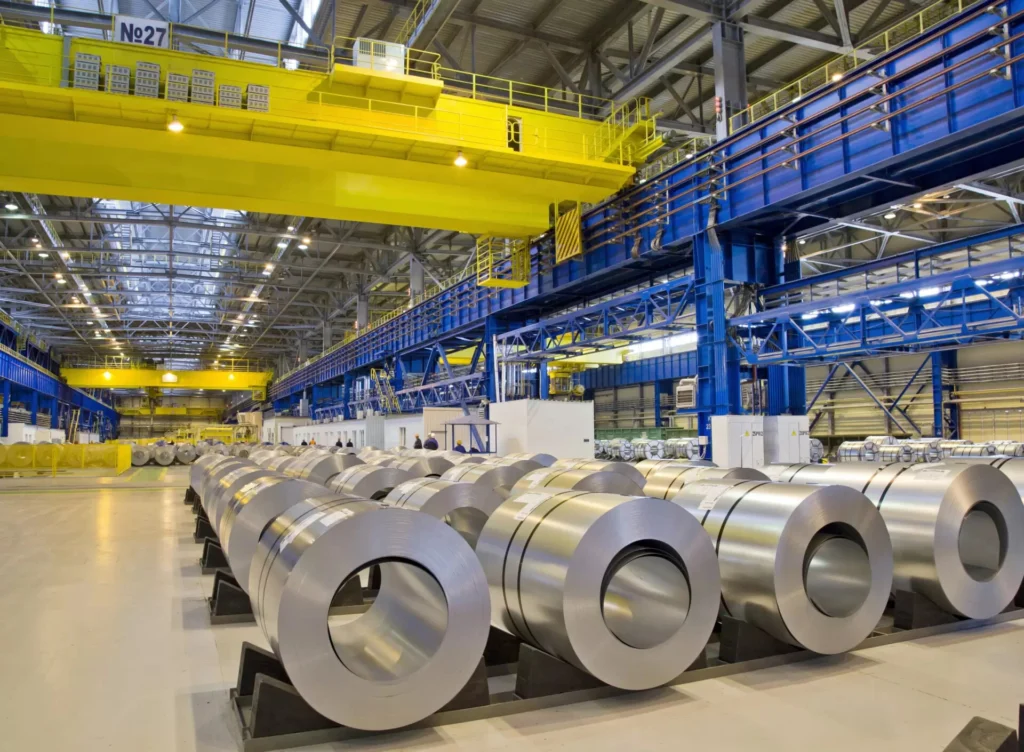
China is expected to remain the world’s largest steel producer and consumer in 2025, supported by steady demand from emerging industries such as new energy vehicles (NEVs), household appliances, and shipbuilding, despite a projected slight decline in overall steel consumption, according to the China Iron and Steel Association (CISA).
China Steel Industry Outlook for 2025
CISA noted that while total steel demand is expected to continue its downward trend, the pace of decline is likely to narrow. This stabilization reflects policy support aimed at improving downstream demand and optimizing industrial structures.
According to Yao Lin, head of CISA, China’s apparent crude steel consumption declined from 1.048 billion metric tons in 2020 to 892 million tons in 2024, a reduction of 156 million tons over four years. However, policies targeting the stabilization of the real estate market are expected to ease the contraction in construction-related steel demand.
Rising Demand for High-Quality Special Steel
Despite overall demand softening, demand for high-quality special steel products is expected to grow. These include special steel varieties with higher performance, longer service life, environmental advantages, advanced technology content, and higher added value, particularly for high-end equipment manufacturing.
Industries such as automotive manufacturing, household appliances, shipbuilding, engineering machinery, and mining equipment are increasingly prioritizing advanced steel materials. For example:
- The consumer goods trade-in program is expected to boost demand for high-grade silicon steel used in automobiles and household appliances.
- Household appliance steel will increasingly focus on lightweight and corrosion-resistant properties.
- Shipbuilding demand is projected to grow steadily.
- Demand for high-strength steel in engineering machinery and mining equipment is set to rise.
- High-end pressure vessel steel, widely used in new energy equipment, shows notable growth potential.
Challenges: Oversupply and Export Pressures
Yao emphasized that one of the steel industry’s key challenges is excess total supply capacity amid weakened demand, with a new dynamic balance mechanism between supply and demand still under development. This imbalance has created significant pressure on steel enterprises’ operational stability and profitability.
On the international front, steel exports face mounting challenges due to geopolitical tensions and trade frictions. CISA data shows that China was involved in 33 trade remedy investigation cases in 2024, exceeding the total number recorded from 2020 to 2023 combined.
Industry Response: Structural Reform and High-Value Products
To address these challenges, industry leaders stress the need to accelerate reforms across multiple fronts, including:
- Establishing a new balance between market supply and demand
- Optimizing industrial structures
- Strengthening resource security systems
- Advancing key core technologies
- Promoting green and low-carbon transformation
Song Zhiping, head of the China Association for Public Companies, highlighted the importance of preventing excessive homogeneous competition. He called for stricter controls on capacity expansion while improving demand-side absorption of surplus production.
“Steel enterprises should focus on product differentiation, branding, and specialization, particularly by increasing R&D investment and producing high value-added steel products,” Song said.
Implications for Global Steel Buyers
For global buyers, China’s continued leadership in steel production — combined with a growing emphasis on special steel, high-strength steel, and environmentally friendly materials — suggests more stable supply chains and increasing availability of high-performance steel products in 2025.
Companies sourcing stainless steel, alloy steel, tool steel, and specialty steel may benefit from China’s ongoing structural upgrades and innovation-driven development.
Source
China Daily
Category: Steel Industry News
Published by: Baowu Special Steel